Use reference objects to get better results
A coin, a scale and a ruler will do more for your results than any camera upgrade.
Marcel Buth · Co-founder, IsItGOLD?
· 2 min read
A photo shows colour, shape and texture. It does not show size or weight, and those two are exactly what an estimated value range depends on. You can put both into the frame with things you already own.
Add a size reference
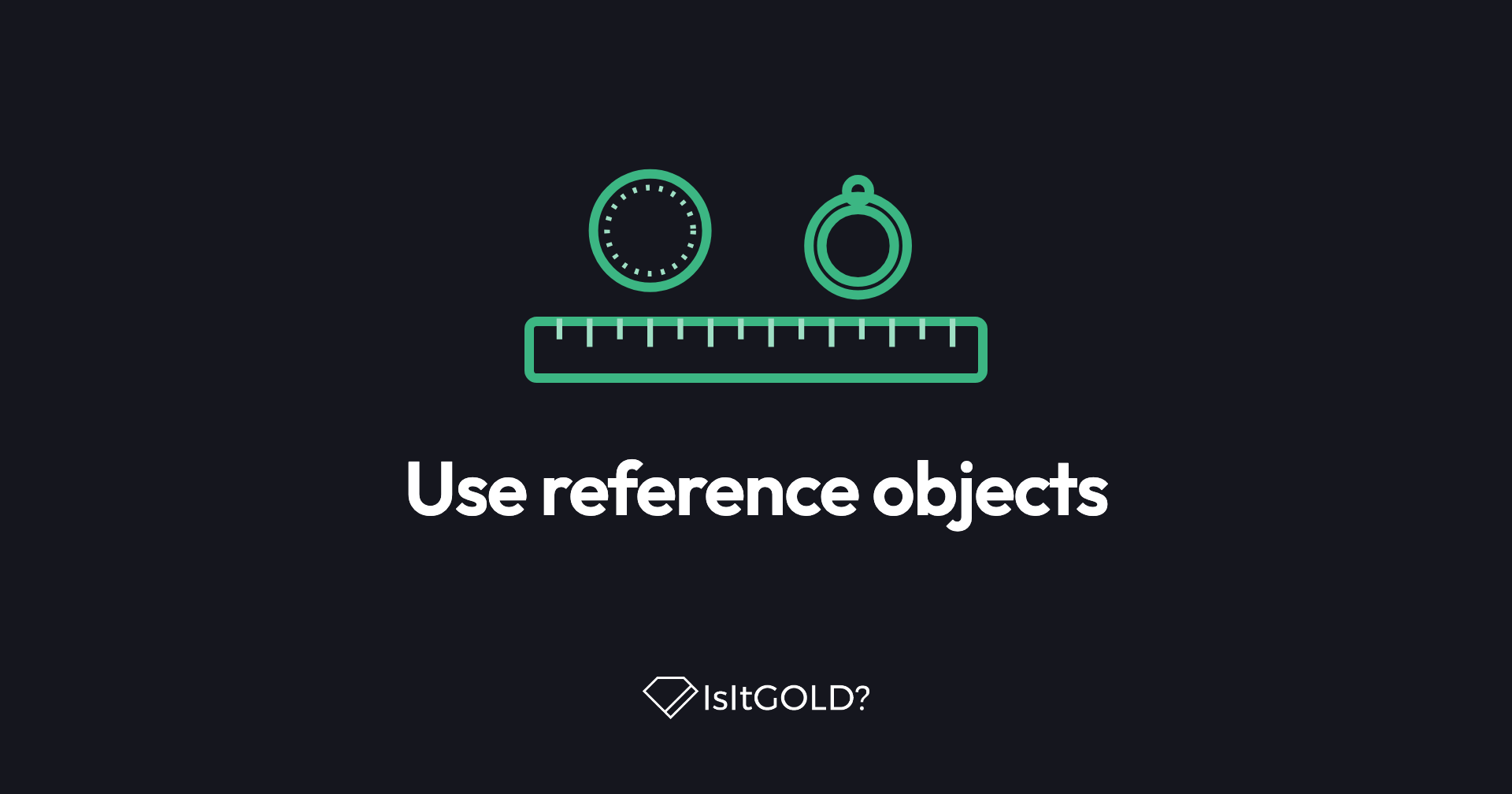
Include an object of known size — a common coin, or a ruler. It anchors the scale of your item, improves how its proportions are read, and makes the scan legible to anyone you show it to later.
This costs nothing and it is the reference people most often forget.
Show the weight, do not just type it
Put the piece on a digital scale, tare it first, and photograph the item with the display visible.
Weight is the single most influential input in the whole scan. An estimated value range built on a weight you measured is on much firmer ground than one built on an assumed weight, and the difference is not small. If you do one thing from this post, do this one.
Use a comparison object
If you own something of the same type you know is genuine — a verified gold coin, a piece with a clear hallmark — photograph it in the same frame as the unknown item.
Side by side, under identical light, differences in colour and lustre are far easier to see than they are in isolation. This is one of the more reliable ways to spot a convincing fake.
Add a colour reference
A small grey card or colour chart next to the object gives your camera something neutral to balance against. It helps correct the lighting cast and makes the difference between gold, brass and plated brass easier to judge — a distinction that is very easy for a camera to get wrong under warm indoor light.
Why this works
The analysis reads visual evidence. Every known, measurable element you put in the frame is one less thing it has to infer. Scale, weight and a neutral colour anchor replace three assumptions with three facts, which is why they narrow the result more than another angle would.
Keep it clean and flat
Non-reflective, neutral background. No shadows across the object, no glare. Phone directly above the piece, steady hands or a stand.
A coin, a scale and a ruler
That is the whole kit. No special equipment, and it will do more for the quality of your results than any camera upgrade.
One caveat worth repeating: a better-founded estimate is still an estimate. A visual analysis does not establish purity. If real money depends on the answer, have the piece independently tested — and use the scan to decide whether that is worth doing.